
Defatted Wheat Germ vs Full-Fat Wheat Germ
Defatted wheat germ: a more stable and functional ingredient for modern formulations
Designed to improve shelf life, consistency, and nutritional performance compared with traditional wheat germ.
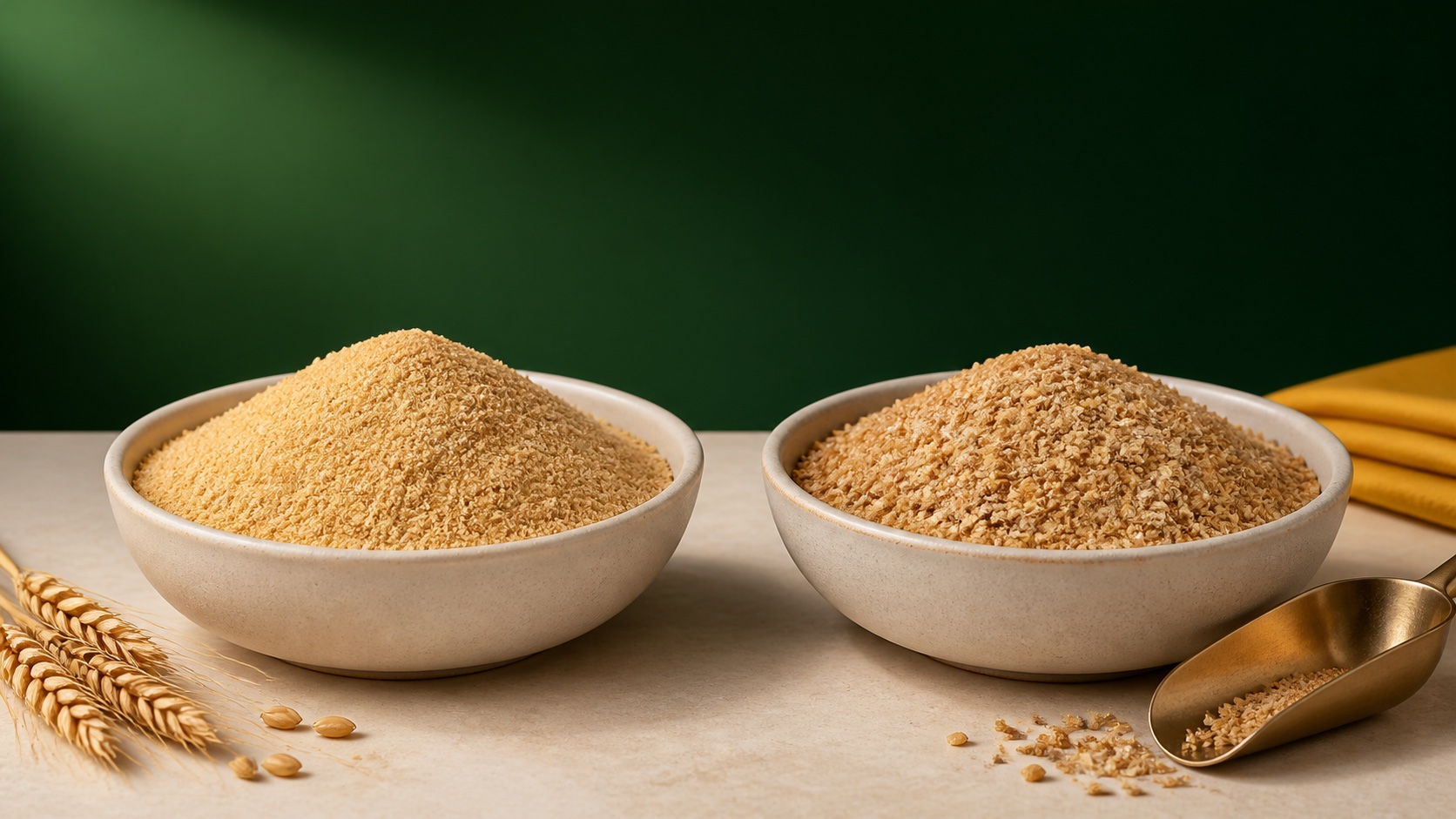
The main difference starts with oil content
Defatted wheat germ is produced by removing the oil fraction from wheat germ. That reduced oil content improves shelf stability and oxidative stability compared with full-fat or traditional wheat germ.
- Defatted wheat germ has the oil fraction removed
- Full-fat wheat germ keeps more of the original oil content
- Reduced oil improves shelf stability and oxidative stability
- The best choice depends on the application and product requirements

Improved stability
Removing the oil fraction improves shelf stability and oxidative stability compared with full-fat or traditional wheat germ.

Protein and fiber
Defatted wheat germ maintains protein and fiber contribution while offering a lower-oil format for modern formulations.

Consistent performance
Defatted wheat germ can support consistent performance across production and storage review.
Functional advantages in shelf-stable foods
Defatted wheat germ is a practical fit for shelf-stable products where oxidation, rancidity risk, consistency, protein and fiber contribution, and clean-label positioning need to be evaluated together. Teams reviewing fit can continue with the defatted wheat germ resource guide.
- Extended shelf life compared with traditional wheat germ
- Improved oxidative stability due to reduced oil
- Consistent performance across production and storage
- Protein and fiber contribution with clean-label positioning
Where defatted wheat germ may be the better evaluation path
Defatted wheat germ is ideal for products where shelf stability, consistent texture, appearance, nutritional contribution, and lower oxidation risk matter, including cereal and snack applications, pasta applications, and bakery applications.
- Shelf-stable cereal, snack, pasta, and bakery products
- Applications with oxidation or rancidity concerns
- Formulas that need consistent texture and appearance
- Products seeking protein and fiber contribution from a wheat-derived ingredient
Move from comparison to sample review
The right wheat germ format should be chosen based on shelf-life expectations, processing conditions, nutritional outcomes, and the finished product target. Use the sample request guide to prepare application and documentation context before contacting Viobin.
- Clarify shelf-life and stability expectations
- Name the application and processing environment
- Compare texture, appearance, and nutritional goals
- Carry the decision into specifications, COAs, and supplier review
Quality and food safety standards
Every batch of Viobin defatted wheat germ undergoes microbiological testing, including APC, yeast and mold, and Salmonella. Viobin operates under BRC-certified, GFSI-benchmarked food safety standards, giving procurement and QA teams a stronger documentation path for ingredient review.
- Microbiological testing includes APC, yeast and mold, and Salmonella
- BRC-certified, GFSI-benchmarked food safety standards
- Specifications, COAs, traceability, and quality documentation available for review
- Quality and safety information can move with the sample and supplier qualification process
FAQ