
The Complete Defatted Wheat Germ Resource Guide
Defatted wheat germ: a functional ingredient for modern food applications
A practical guide to what defatted wheat germ is, what it contributes, how buyers evaluate it, and how to choose the next application path.
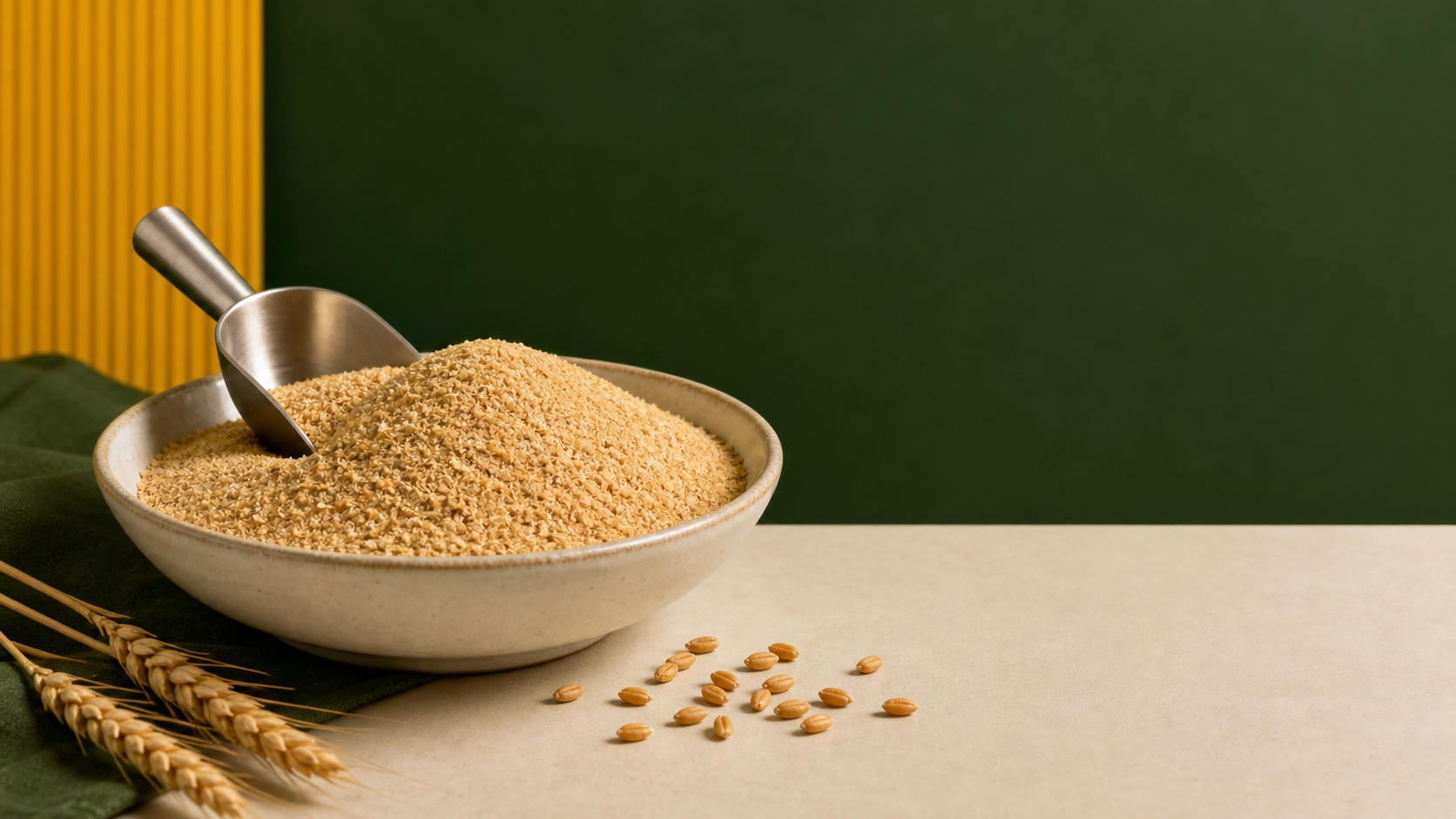
What defatted wheat germ is
Defatted wheat germ is a wheat-derived ingredient produced by removing the oil fraction from wheat germ. The result is a lower-fat, shelf-stable ingredient that can fit food applications where protein, fiber, consistency, and formulation performance matter.
- Wheat-derived ingredient produced from the germ portion of wheat
- Oil fraction removed to improve shelf stability
- Lower oxidation risk compared with traditional wheat germ
- Protein and fiber contribution for modern food applications

What it is
Defatted wheat germ is produced by removing the oil fraction from wheat germ to create a lower-fat, shelf-stable ingredient.

What it contributes
It can support protein and fiber enhancement, formulation consistency, clean-label positioning, and recognizable wheat-derived ingredient declarations.

How buyers evaluate it
R&D, procurement, and QA teams commonly review samples, particle size, toast direction, specifications, COAs, traceability, and food safety documentation.
How defatted wheat germ contributes to food formulations
Defatted wheat germ can support nutrition, stability, and formulation performance while giving brands a recognizable ingredient declaration. The right format should be evaluated in the finished product, not in isolation.
- Protein and fiber enhancement
- Shelf stability due to reduced oil content
- Consistent ingredient performance across application review
- Clean-label and recognizable wheat-derived positioning
Common food applications for defatted wheat germ
Defatted wheat germ can be evaluated in cereal and breakfast products, granola and snack bars, crackers and baked goods, pasta, and other grain-based formulas where texture, structure, and visual grain character matter. Review bakery applications, cereals, granola, and snack bars, or pasta applications for a more focused next step.
- Cereal and breakfast products
- Granola and snack bars
- Crackers, baked goods, and bakery products
- Pasta and grain-based formulations
Particle size, toast direction, and finished-product goals
Particle size and toasting influence how defatted wheat germ performs in texture, structure, visible grain character, color, aroma, and flavor. Teams that already know presentation matters can review how to choose particle size and toast level.
- Finer formats can support more integrated texture
- Coarser formats can support visible grain character
- Toast level can influence aroma, color, and flavor intensity
- Format decisions should be connected to sample and specification review
FAQ