
Defatted Wheat Germ for Bakery Applications
Improve bakery formulations with defatted wheat germ
Designed to enhance texture, structure, and finished product quality in bakery formulations.
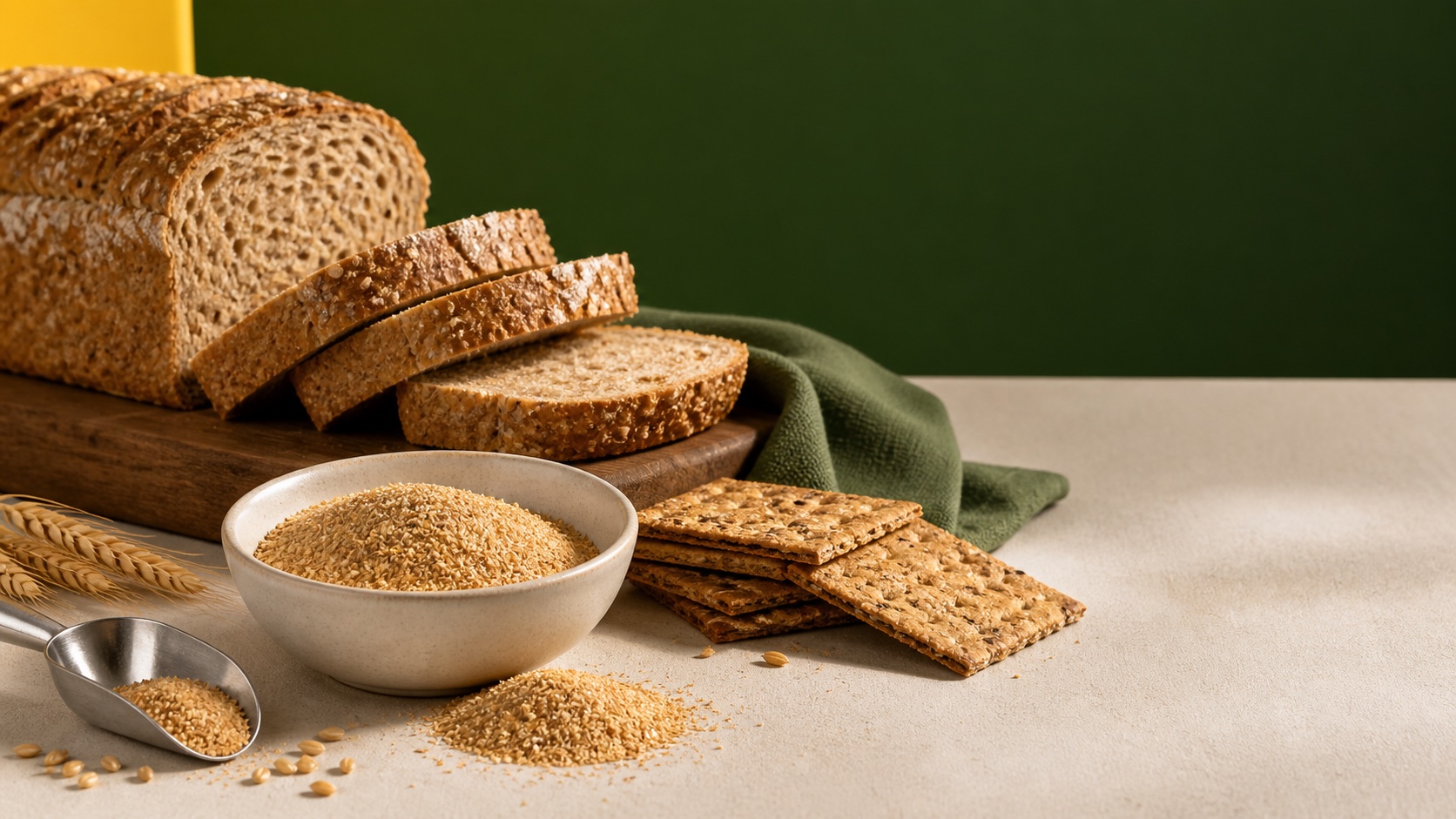
Common bakery applications
Defatted wheat germ can be evaluated in breads, rolls, crackers, baked snacks, cookies, sweet baked goods, and products where texture, grain character, and quality consistency matter.
- Breads and rolls where crumb structure and grain identity matter
- Crackers and baked snacks where texture, bite, and toasted note matter
- Cookies and sweet baked goods where protein, fiber, and grain character can support positioning
- Products requiring texture, grain character, or appearance control
 Improve crumb structure and finished-product texture
- Support clean-label positioning with a wheat-derived ingredient
- Support consistency across batches and production review
- Add protein and fiber contribution to bakery formulas
- Use integrated or visible grain applications depending on product goals
- Support QA review with microbiological testing and BRC/GFSI food safety documentation
Particle size and toast in bakery formulas
Particle size and toasting influence performance. Finer formats integrate more easily into crumb structure, while coarser formats support visible grain character. Toast direction can influence aroma, color, and flavor intensity. For a deeper review, see how to choose particle size and toast level.
- Finer particle sizes can integrate into crumb and dough systems
- Coarser particle sizes can support visible grain character
- Toast direction can influence color, aroma, and flavor intensity
- Viobin can recommend a format based on the target bakery application
Quality and food safety standards
Every batch of Viobin defatted wheat germ undergoes microbiological testing, including APC, yeast and mold, and Salmonella. Viobin operates under BRC-certified, GFSI-benchmarked food safety standards, giving procurement and QA teams a stronger documentation path for ingredient review.
- Microbiological testing includes APC, yeast and mold, and Salmonella
- BRC-certified, GFSI-benchmarked food safety standards
- Specifications, COAs, traceability, and quality documentation available for review
- Quality and safety information can move with the sample and supplier qualification process